
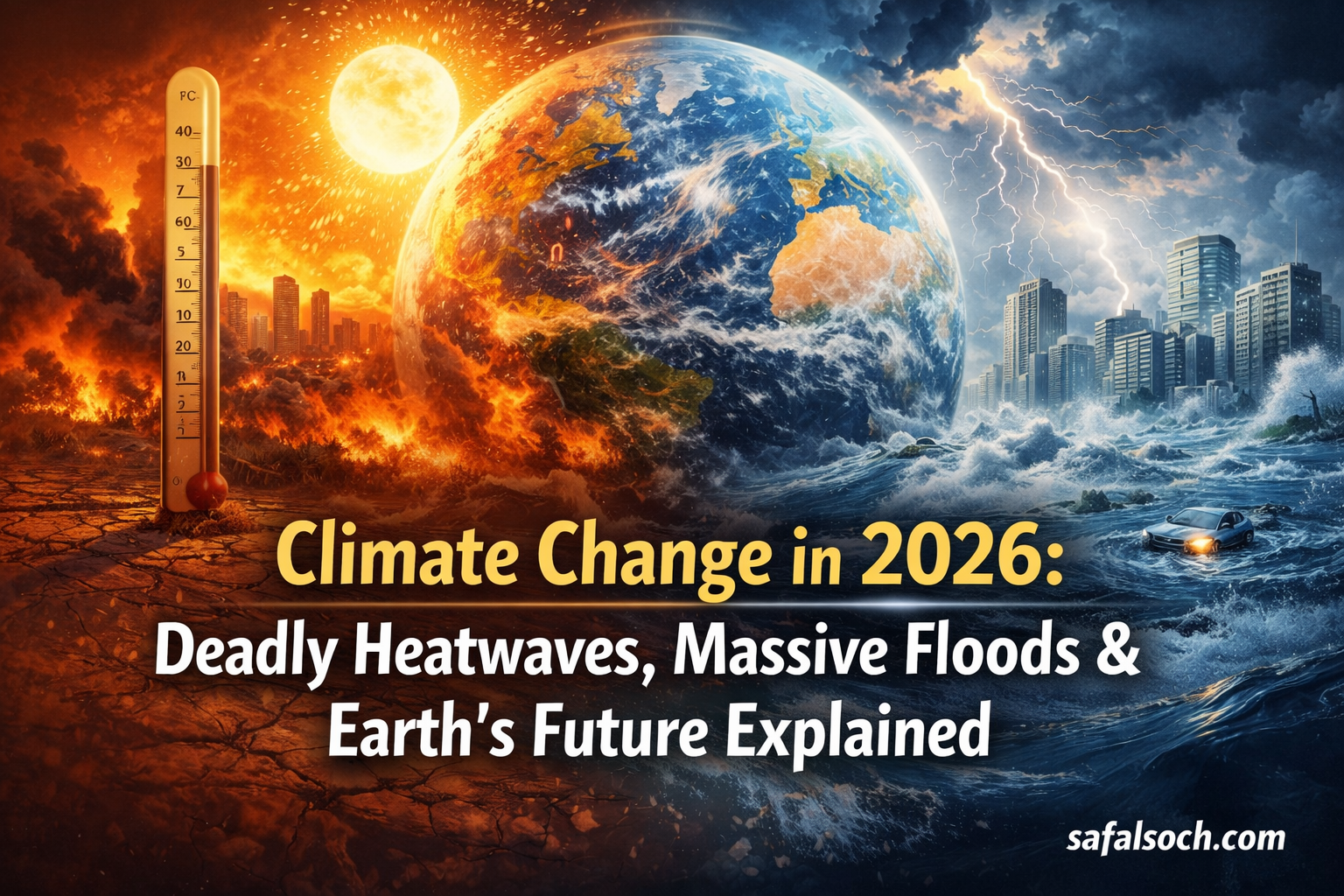
Climate change is no longer a distant threat or a topic limited to scientific reports. In 2026, it has become a global emergency that directly affects our daily lives. From record-breaking heatwaves to deadly floods and rising sea levels, the planet is showing clear warning signs.
The biggest question people are asking today is:
Why is climate change becoming so dangerous so fast—and what does it mean for our future?
This article explains:
- The real reasons climate change is accelerating
- Its impact on humans and nature
- What the future looks like if we don’t act
- Practical solutions that actually make a difference
1. Record-Breaking Heatwaves: A New Normal
Extreme heat is one of the most visible effects of climate change. Many regions across the world are experiencing temperatures 5–7°C higher than average.
Major causes of rising heat:
- Increased greenhouse gas emissions
- Deforestation and loss of green cover
- Rapid urbanization and concrete cities
- Overdependence on fossil fuels
Real-life impact:
- Heatstroke and dehydration cases rising
- Water shortages in major cities
- Higher electricity demand and power failures
- Reduced productivity and health risks
Heatwaves are no longer rare events—they are becoming longer, stronger, and more frequent.
2. Floods and Extreme Rainfall: Nature Out of Balance
Climate change has completely disrupted global rainfall patterns. Instead of steady seasonal rain, many areas now face short bursts of extremely heavy rainfall.
Why floods are increasing:
- Warmer air holds more moisture
- Rapid glacier melting
- Poor urban planning and drainage systems
- Loss of wetlands and forests
Consequences:
- Urban flooding in major cities
- Crop damage and food supply disruption
- Spread of waterborne diseases
- Displacement of millions of people
Floods are no longer limited to coastal or river areas—even modern cities are at risk.
3. Rise in Natural Disasters Worldwide
Climate change is intensifying natural disasters across the globe.
Climate-related disasters increasing rapidly:
- Stronger cyclones and hurricanes
- Longer droughts
- Wildfires spreading faster than ever
- Landslides and soil erosion
Oceans are absorbing excess heat, making storms more powerful. At the same time, dry regions are becoming drier, increasing the risk of fires and famine.
4. Melting Ice and Rising Sea Levels
Glaciers and polar ice caps are melting at alarming speeds. This directly leads to rising sea levels, threatening coastal cities and island nations.
Future risks:
- Coastal flooding
- Loss of freshwater sources
- Forced migration
- Damage to marine ecosystems
If current trends continue, millions of people could lose their homes within the next few decades.
5. How Climate Change Affects Human Health
Climate change is not just an environmental issue—it’s a public health crisis.
Health impacts include:
- Respiratory diseases due to air pollution
- Heat-related illnesses
- Spread of infectious diseases
- Mental health stress caused by climate disasters
Children, elderly people, and low-income communities are the most vulnerable.
6. What the Future Looks Like if We Do Nothing
Experts warn that the next 10 years are critical.
If immediate action is not taken:
- Food prices will rise sharply
- Drinking water scarcity will worsen
- Climate migration will increase
- Global economic instability may occur
Climate change will affect every country, regardless of wealth or development.
7. Solutions: How We Can Slow Down Climate Change
Individual actions that matter:
- Reduce electricity and water waste
- Use public transport, EVs, or bicycles
- Plant trees and protect green spaces
- Reduce plastic usage
- Support sustainable brands
Global and government-level actions:
- Shift to renewable energy
- Protect forests and oceans
- Enforce environmental laws
- Invest in climate-resilient infrastructure
Saving the planet is not a choice anymore—it is a responsibility.
Climate change is not a future problem—it is happening right now. The rising heat, deadly floods, and increasing disasters are clear signals that the Earth is under stress.
The good news is that solutions still exist. With collective effort, smart policies, and individual responsibility, we can reduce the damage and protect future generations.
The planet doesn’t need saving from nature—it needs saving from us
Table of Contents
- Meet Pranjali Awasthi: The 16-Year-Old Indian Founder Behind a ₹100 Crore AI Startup
- EPFO Online Service 2026: PF Withdrawal, KYC Update & Claim Process Made Easy
- भारत में मोटापा क्यों बढ़ रहा है ? चौंकाने वाली रिपोर्ट और आसान उपाय
- Dhurandhar 2 Collection Day 1: Box Office पर तूफानी कमाई, ₹90+ करोड़ पार
- घर बैठे ₹1000 रोजाना कैसे कमाएं – 2026 में आसान और भरोसेमंद तरीका




One thought on “Climate Change in 2026: Deadly Heatwaves, Massive Floods & Earth’s Future Explained”