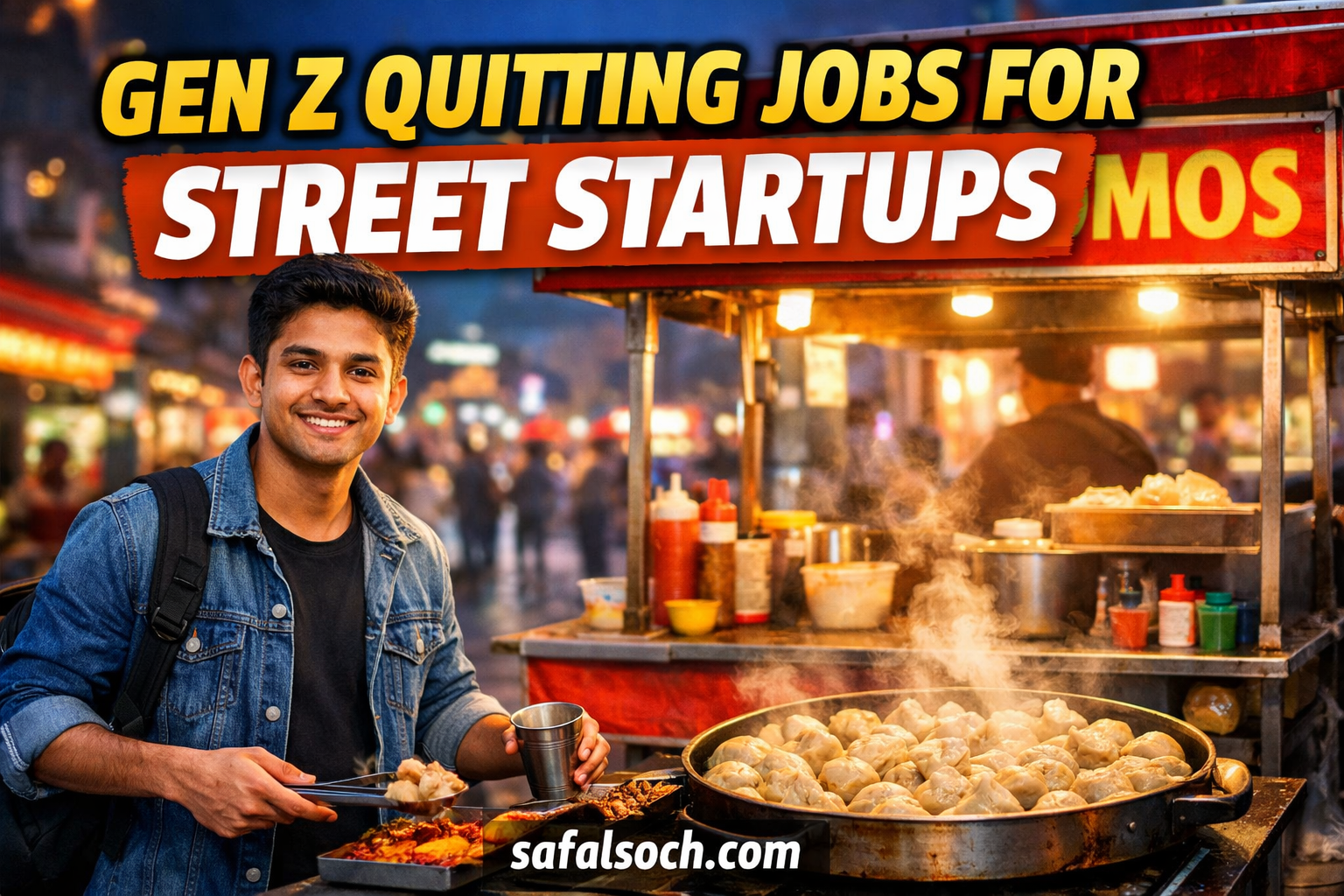
(Gen Z in India) .In March 2026, a young coder named Arjun left his IT job in Bangalore. He set up a small momo stall on a busy street corner. Within weeks, he earned more than his old salary. This story repeats across India. Young people ditch office desks for roadside ventures. Stats show it clear. A 2025 survey by the Indian Youth Forum found 55% of Gen Z aged 18-25 plan to start their own business by 2026. They pick low-cost options like fast food shops or small stalls. This shift blends money needs, fresh values, and tech tools. We look at why India’s Gen Z chooses this path. Economic pressures push them. Culture changes pull them. Tech makes it easy. By 2026, these roadside startups could reshape urban jobs.
The Economic Calculus: Why the Stall Outweighs the Cubicle
Money talks loud in India today. Gen Z faces high costs but low job gains. Roadside businesses offer quick wins. They beat the slow climb of salaried work.
Low Barrier to Entry vs. High Cost of Living
Starting a street food stall costs little. You need about 50,000 rupees for basics like a cart, stove, and ingredients. Compare that to city rents. In Mumbai or Delhi, a small apartment runs 20,000 rupees monthly. Add education loans. Many grads owe 5-10 lakhs from college. White-collar jobs in Tier 1 cities pay 30,000-50,000 rupees at start. But after taxes and bills, little stays. Roadside setups skip relocation fees. No need for fancy offices. Keywords like low investment business India fit here. Young folks see stalls as smart bets. They build wealth without debt traps.
The Quick Cash Flow Advantage
Office jobs pay once a month. You wait for that salary hit. A fast food stall brings cash daily. Sell 100 plates of chaat at 50 rupees each. That’s 5,000 rupees in a day. Minus costs, profit hits 2,000-3,000 rupees. Weekly tallies beat monthly waits. A 2025 FICCI report notes street food profit margins at 40-60%. That’s higher than many entry-level salaries after deductions. Cash flows fast for emergencies. Pay rent on time. Buy family needs. No boss holds your purse strings. This speed draws Gen Z to quit job and start fast food shop choices.
The Shadow of Job Insecurity and Automation
Corporate gigs feel shaky. Layoffs hit tech firms hard in 2025. Over 1 lakh jobs gone in IT alone, per Economic Times data. Gig work adds no safety net. AI tools take routine tasks. Why chase unstable paths? Self-run stalls offer control. You decide hours. Build your safety. In 2026, automation fears grow. A stall stays human-touch focused. Food prep needs real hands. This security sways youth to roadside startups.
Cultural Shift: Redefining Success Beyond the Corporate Ladder
India’s young generation questions old rules. They want lives on their terms. Corporate ladders look dull. Roadside ventures shine bright.
Autonomy Over Authority: The Desire for Control
Gen Z craves freedom. Bosses set strict hours in offices. You follow rules. A small stall lets you call shots. Open at dawn. Close when tired. Make choices on menu or price. This power feels good. A 2025 Deloitte study says 70% of Indian Gen Z value flexibility over pay. They see direct impact. Serve happy customers. Watch your idea grow. No middle managers block you. Autonomy drives this quit job trend.
The ‘Hustle Culture’ Reimagined
Hustle means hard work now. But not in suits. It’s in visible spots like food carts. Success shows quick. A busy stall draws crowds. That’s real proof. Corporate wins hide in reports. Gen Z rethinks this. They chase tangible goals. Build a brand from scratch. Social stories fuel it. Friends share wins online. This new hustle fits their vibe.
Peer Validation and Social Media Showcase
Instagram changes views. Post your stall’s sizzle. Likes pour in. Friends cheer. Corporate desks? Not photo-friendly. Dull screens and ties. Roadside life pops with color. Street lights. Steaming food. A 2026 Social Media Trends report by Hootsuite shows 60% of Indian youth get career ideas from peers online. Local success stories inspire. See a chai stall boom? Start your own. Validation comes fast. It pulls them from jobs to stalls.
The Tech Catalyst: Digitization Fueling Street Entrepreneurship
Tech levels the field. Small vendors use apps like pros. Barriers drop. Roadside businesses thrive with digital help.
Digital Payments and Financial Inclusion (UPI Revolution)
Cash ruled streets once. Now UPI changes it. Tools like Google Pay or PhonePe make sales easy. Scan and pay. No coin mess. Less theft risk. Track earnings simple. RBI data from 2025 says UPI handles 80% of small transactions. Stall owners join banks easy. Loans come faster with records. This inclusion boosts confidence. Gen Z startups run smooth.
Hyperlocal Logistics and Cloud Kitchen Synergy
Apps like Zomato expand reach. Your stall ties in. Customers order from home. Delivery riders pick up. Turn a corner spot into a mini kitchen. No big space needed. Swiggy’s 2026 report notes 30% growth in street vendor partnerships. Reach beyond your block. Sales double. For newbies, essential apps help. Try Khatabook for stock. Or OkCredit for bills. These tools cut hassle.
Targeted Digital Marketing for Local Foot Traffic
Ads cost little now. Use Facebook geo-targeting. Show your stall to nearby folks. Budget 500 rupees daily. Pull in crowds. Instagram Reels show your food fun. Hashtags like #StreetFoodIndia trend. Track who comes. Adjust quick. This marketing draws steady buyers. Gen Z masters it fast.
If you wonder about timing, check these quit job questions to weigh risks right.
From Passion Project to Profit Center: The Fast Food Focus
Fast food leads the pack. It’s easy entry. High demand. Gen Z turns hobbies into cash.
Standardization and Scalability of Quick Service Restaurants (QSR) Models
QSR ideas work well. Think momos or fusion chaat. Recipes stay simple. Buy bulk spices cheap. Margins hit 50%. Scale by adding carts. In Delhi, a momo chain started small. Now five spots run. Per a 2025 startup report, QSR growth tops 25% yearly. Copy these models. Adapt local tastes. Profit follows.
- Pick high-demand items: Vada pav in Mumbai. Dosa twists in South.
- Standardize portions: Keep costs tight.
- Scale slow: Test one spot first.
Lower Operational Complexity
Full restaurants need chefs and waiters. Stalls skip that. You cook. Family helps. Supply chains short. Buy from local markets daily. Fresh and cheap. No big storage woes. Compare to cafes. Less waste. Easier clean-up. This simplicity lets solo runs.
Product Innovation and Niche Targeting
Gen Z mixes trends. Add Korean spice to pav bhaji. Or vegan options. Catch eyes quick. Niche hits like artisanal cold coffee stands boom in heat. Target office crowds. Quick bites for lunch. Innovation sets you apart. Build loyal fans. Turn passion to profit.
For more ideas, explore small business ideas that fit tight budgets.
Navigating the Hurdles: Risks and Realities of Roadside Ventures
Not all smooth. Challenges hit hard. Know them before jump.
Regulatory Ambiguity and Municipal Compliance
Permits puzzle many. Food licenses vary by city. Hygiene rules strict post-2025 acts. Local bodies check often. Fines hurt if skip. Get FSSAI card early. Costs 2,000 rupees. Join vendor groups for tips. Navigate slow but steady.
Weather Dependency and Infrastructure Woes
Rain stops sales. Monsoons flood streets. Heat slows cooks. Power cuts kill stoves. Backup generators cost extra. Urban spots lack shade. Plan for it. Use tents. Pick covered areas. These woes cut revenue 20-30% some days, says a 2026 vendor survey.
The Burnout Factor of Direct Ownership
No off days easy. You man the stall dawn to dusk. Family time shrinks. Corporate jobs offer leaves. Here, rest means lost cash. Pace yourself. Hire help after profits roll. Balance key to last. The Future of Work is Street Level
India’s Gen Z rewrites rules by 2026. Economic math favors low investment business India paths. Culture prizes control and visible wins. Tech opens doors wide. Fast food stalls lead as entry points. Yet hurdles like rules and weather demand smarts. Together, these forces drive the shift. Roadside startups could add 10 million SME jobs by 2030, per government estimates. Urban scenes change. More carts than cubicles. This trend empowers youth. They claim success their way. Ready to start? Test a small idea. Watch it grow on your street.