
Cybersecurity is no longer a luxury—it is a necessity in 2026. With rapid digital transformation, more people are working, shopping, and communicating online than ever before. But as our dependence on technology grows, so do the threats to our personal data, businesses, and critical networks.
Hackers are becoming smarter, using AI, ransomware, and social engineering to exploit vulnerabilities. In this article, we will explore the top cybersecurity threats of 2026, their real-world impact, and practical steps to protect yourself online.
1. Ransomware Attacks Are More Dangerous Than Ever
Ransomware remains one of the most damaging cybersecurity threats. Hackers encrypt a victim’s files and demand payment—often in cryptocurrency—for decryption.
Why It’s Worse in 2026:
- AI-powered ransomware attacks can automatically identify vulnerable systems.
- Businesses, hospitals, and schools are prime targets.
- Personal devices are increasingly at risk as smart home tech becomes mainstream.
How to Protect Yourself:
- Backup your data regularly to offline or cloud storage.
- Use strong, unique passwords and change them often.
- Enable two-factor authentication (2FA) on all accounts.
- Keep your operating system and apps updated with the latest security patches.
Ransomware doesn’t just steal data—it disrupts lives and businesses. Prevention is key.
2. Phishing and Social Engineering Scams
Phishing attacks trick users into revealing sensitive information like passwords, bank details, or personal data. In 2026, phishing is more sophisticated, often using AI-generated emails or messages that are almost indistinguishable from legitimate communications.
Examples:
- Fake bank alerts claiming unusual activity
- Fraudulent messages from popular apps or social media
- Emails with malicious attachments disguised as invoices or reports
Protection Tips:
- Always verify the sender before clicking links.
- Hover over URLs to check for fake domains.
- Avoid downloading attachments from unknown sources.
- Use email filtering and anti-phishing software.
Remember: hackers rely on human error more than technical flaws.
3. IoT Device Vulnerabilities
The rise of smart homes, wearables, and IoT devices has introduced new cybersecurity risks. Many devices come with weak default passwords or outdated firmware, which hackers can exploit.
Risks in 2026:
- Smart cameras or doorbells being hacked to access private spaces
- Wearables leaking health or location data
- Unsecured IoT devices used as entry points for larger network attacks
Protection Tips:
- Change default passwords immediately after setup
- Regularly update firmware
- Only use trusted brands with security updates
- Disable unnecessary IoT features
Every connected device is a potential gateway for hackers—treat IoT devices like part of your digital security system.
4. Cloud Security Risks
With the massive migration to cloud storage, cloud security has become a critical concern. Misconfigured accounts, unsecured file sharing, and outdated access controls are common causes of breaches.
How Cloud Security is Threatened in 2026:
- Hackers target misconfigured cloud servers to steal sensitive data.
- Phishing attacks can give cybercriminals access to cloud platforms.
- Multi-tenant environments increase the risk of cross-account breaches.
Protection Tips:
- Enable encryption for cloud data
- Use multi-factor authentication (MFA)
- Monitor account access logs regularly
- Avoid storing sensitive data on public or unsecured cloud services
Cloud security isn’t just IT’s responsibility—everyone using cloud systems must follow best practices.
5. AI-Powered Cyber Attacks
Artificial Intelligence is a double-edged sword. While it helps in cybersecurity defense, hackers are also using AI to launch more precise and automated attacks.
Examples of AI Threats in 2026:
- AI-generated phishing emails
- Automated malware deployment
- Deepfake scams targeting executives and public figures
Protection Tips:
- Invest in AI-based security solutions
- Educate employees and users about AI-generated threats
- Regularly update antivirus and antimalware software
In 2026, cybersecurity is a race—AI helps both attackers and defenders.
6. Human Error: The Weakest Link
Despite technology advancements, human error remains the leading cause of breaches. Employees or users inadvertently clicking malicious links or sharing sensitive information are often the entry point for hackers.
Prevention Tips:
- Conduct regular cybersecurity awareness training
- Create strong password policies
- Simulate phishing exercises to test employee readiness
- Encourage reporting of suspicious activity immediately
Your technology is only as strong as the people using it. Awareness is a powerful defense.
7. The Future of Cybersecurity in 2026
Cybersecurity threats are becoming smarter, faster, and more dangerous every year. In 2026, trends show:
- Increased reliance on AI for both attacks and defense
- Growth in cyber insurance for businesses
- Government regulations tightening around data privacy
- Greater focus on securing IoT, cloud, and remote work systems
One thing is clear: staying safe online requires a proactive, multi-layered approach.
Cybersecurity in 2026 is a critical challenge for everyone—individuals, businesses, and governments. From ransomware and phishing to AI-driven attacks, the threats are evolving rapidly.
By following best practices—strong passwords, 2FA, secure IoT devices, cloud monitoring, and AI-powered tools—you can significantly reduce your risk.
Remember: Your first line of defense is awareness. The second is preparation. Protect your digital life before hackers do.
Table of Contents

- आजकल परिवारों में बढ़ते हत्या के मामले: आखिर हम कहाँ चूक रहे हैं? अपने परिवार को सुरक्षित रखने के लिए ज़रूर पढ़ें
- ज्यादा हाथ में मोबाइल पकड़े रहने से होते हैं 7 बड़े नुकसान
- પથ્થર યુગથી AI યુગ સુધી: માનવ સંસ્કૃતિની અદભૂત સફર
- Roopkund Lake — हिमालय की रहस्यमयी झील जहां बर्फ पिघलते ही दिखते हैं सैकड़ों कंकाल
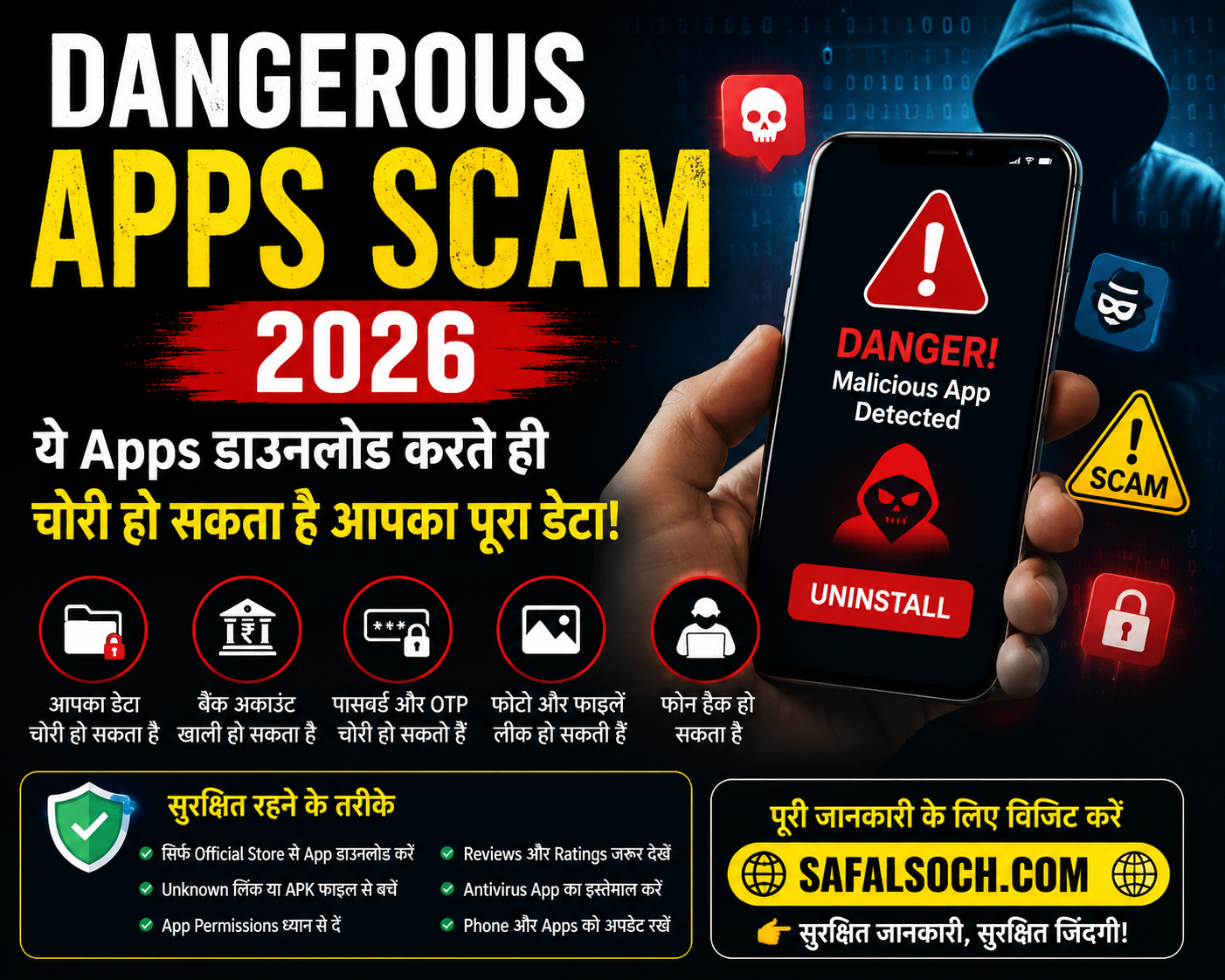
- Dangerous Apps Scam 2026: ये Apps डाउनलोड करते ही चोरी हो सकता है आपका पूरा डेटा!

One thought on ““Top Cybersecurity Threats in 2026 and How to Protect Yourself Online””