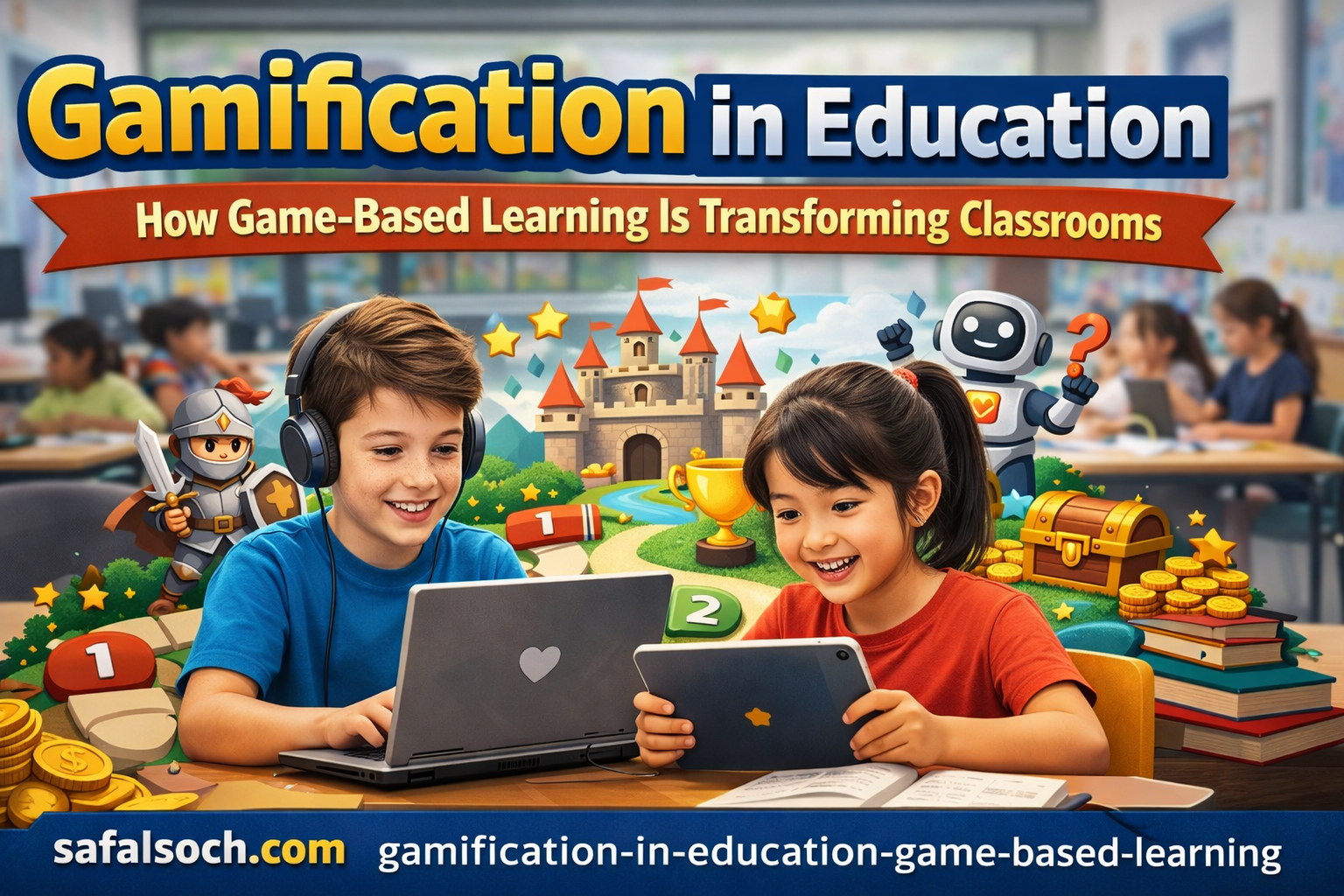
Education is evolving rapidly, and one of the most trending education innovations today is gamification in education. By integrating game elements such as points, badges, leaderboards, and challenges into learning, educators are making classrooms more engaging, interactive, and effective. Gamification not only increases student motivation but also improves learning outcomes in both online and offline education systems.
What Is Gamification in Education?
Gamification in education refers to the use of game-design elements in non-game learning environments. Instead of traditional lectures and rote memorization, students learn through interactive activities that encourage participation and problem-solving.
Common gamification elements include:
- Points and rewards
- Levels and progress tracking
- Badges and certificates
- Quizzes and challenges
- Leaderboards
Why Gamification Is a Trending Education Topic
Gamification has become a top education trend due to the rise of digital learning and changing student expectations. Modern learners, especially Gen Z and Gen Alpha, respond better to interactive and technology-driven learning methods.
Key reasons for its popularity:
- Growth of online learning platforms
- Increased use of mobile apps in education
- Demand for student-centered learning
- Focus on engagement and motivation
Benefits of Gamification in Learning
1. Improves Student Engagement
Gamified lessons make learning fun and interactive, reducing boredom and increasing attention span.
2. Enhances Motivation
Rewards, points, and achievements encourage students to stay consistent and complete tasks.
3. Supports Personalized Learning
Students can progress at their own pace, making gamification ideal for diverse learning abilities.
4. Encourages Healthy Competition
Leaderboards and challenges promote collaboration and friendly competition among students.
5. Improves Knowledge Retention
Interactive learning helps students remember concepts longer compared to traditional teaching methods.
Gamification in Online and Classroom Education
Gamification works effectively in both online education and traditional classrooms. Popular tools like Kahoot, Quizizz, Duolingo, and Classcraft are widely used by teachers worldwide.
Examples:
- Online quizzes with instant feedback
- Classroom reward systems
- Educational games for skill-based learning
- Virtual simulations and role-playing activities
Challenges of Gamification in Education
Despite its advantages, gamification also has some challenges:
- Over-reliance on rewards instead of intrinsic motivation
- Limited access to technology in some regions
- Need for proper teacher training
When implemented thoughtfully, these challenges can be easily managed.
Future of Gamification in Education
The future of gamification looks promising. With advancements in AI, AR, and VR, game-based learning will become more immersive and personalized. Schools and universities are increasingly adopting gamified platforms to prepare students for real-world problem-solving and critical thinking.
Gamification in education is more than just a trend—it is a powerful teaching strategy that enhances engagement, motivation, and learning outcomes. As education continues to embrace digital transformation, gamification will play a key role in shaping the future of learning.
If you’re an educator, student, or EdTech enthusiast, now is the perfect time to explore and adopt game-based learning strategies.
Table of Contents
- आजकल परिवारों में बढ़ते हत्या के मामले: आखिर हम कहाँ चूक रहे हैं? अपने परिवार को सुरक्षित रखने के लिए ज़रूर पढ़ें
- ज्यादा हाथ में मोबाइल पकड़े रहने से होते हैं 7 बड़े नुकसान
- પથ્થર યુગથી AI યુગ સુધી: માનવ સંસ્કૃતિની અદભૂત સફર
- Roopkund Lake — हिमालय की रहस्यमयी झील जहां बर्फ पिघलते ही दिखते हैं सैकड़ों कंकाल
- Dangerous Apps Scam 2026: ये Apps डाउनलोड करते ही चोरी हो सकता है आपका पूरा डेटा!

How Much Do YouTube Shorts Pay? Complete Earnings Guide (2026)
हाइब्रिड क्लासरूम आधुनिक शिक्षा को कैसे बदल रहे हैं
2 thoughts on “Gamification in Education: How Game-Based Learning Is Transforming Classrooms”